


THE HAIR SYSTEM & THE GOAL OF HAIR CARE
HAIR WASH FREQUENCY & PRODUCT CHOICE
There is no universal ideal washing frequency. The healthiest routine depends on your scalp condition, hair type, lifestyle, and personal comfort.
It is less about washing 'too much' or 'too little' and more about choosing the right products to maintain a balanced scalp environment while minimising unnecessary stress on the hair fibre.
The best routine is the one where:
- your scalp feels comfortable
- your hair feels clean, nourished and smooth
- you don't have persistent scalp oiliness/itching/flaking
- your hair isn't becoming excessively dry or breaking
Using a gentle, non-stripping shampoo and adjusting your routine based on how your scalp and hair respond is more important than following a fixed schedule.
BREAK UP WITH SULFATE SURFACTANTS

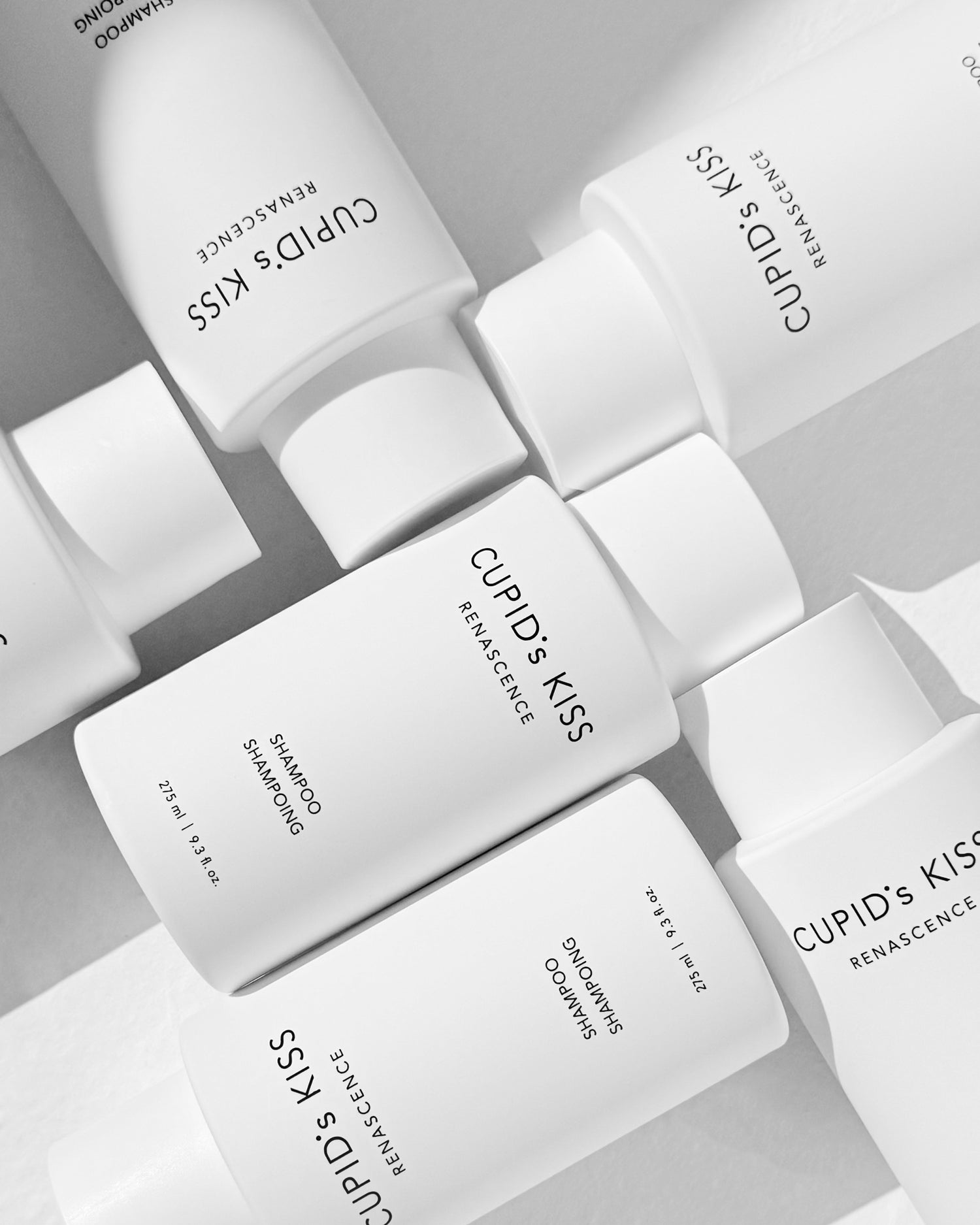
RENASCENCE SHAMPOO
Washing your hair is the foundational step in any haircare routine. By using the correct products and techniques, you can avoid common hair washing mistakes, and instead enjoy the perfect wash day every time.
1 / Brush your hair to detangle before wetting the hair. To avoid breakage and cuticle damage, start detangling from the tips, not from the roots.
2 / Wet your hair thoroughly with lukewarm water. Lukewarm water supports effective cleansing without causing excessive hair shaft swelling.
3 / Lather Renascence Shampoo in your palms before applying to your scalp. Focus on massaging your scalp (where sebum and dirt build up), not the ends. Be gentle when massaging to avoid damaging your hair.
4 / Rinse your hair thoroughly with lukewarm water, ensuring all foam is removed.
5 / We recommend double shampooing. The first shampooing works to break down the buildup of grease or dirt on the scalp and hair. The second shampooing ensures the residue is fully washed away.
WATER TEMPERATURE
REDEMPTION CONDITIONER
While conditioner should be applied to wet hair, a common mistake is applying it to dripping wet hair. Excess water can dilute the product and reduce its effectiveness. After cleansing, gently blot your hair with a soft microfiber towel to remove excess water, then apply the conditioner for better results.
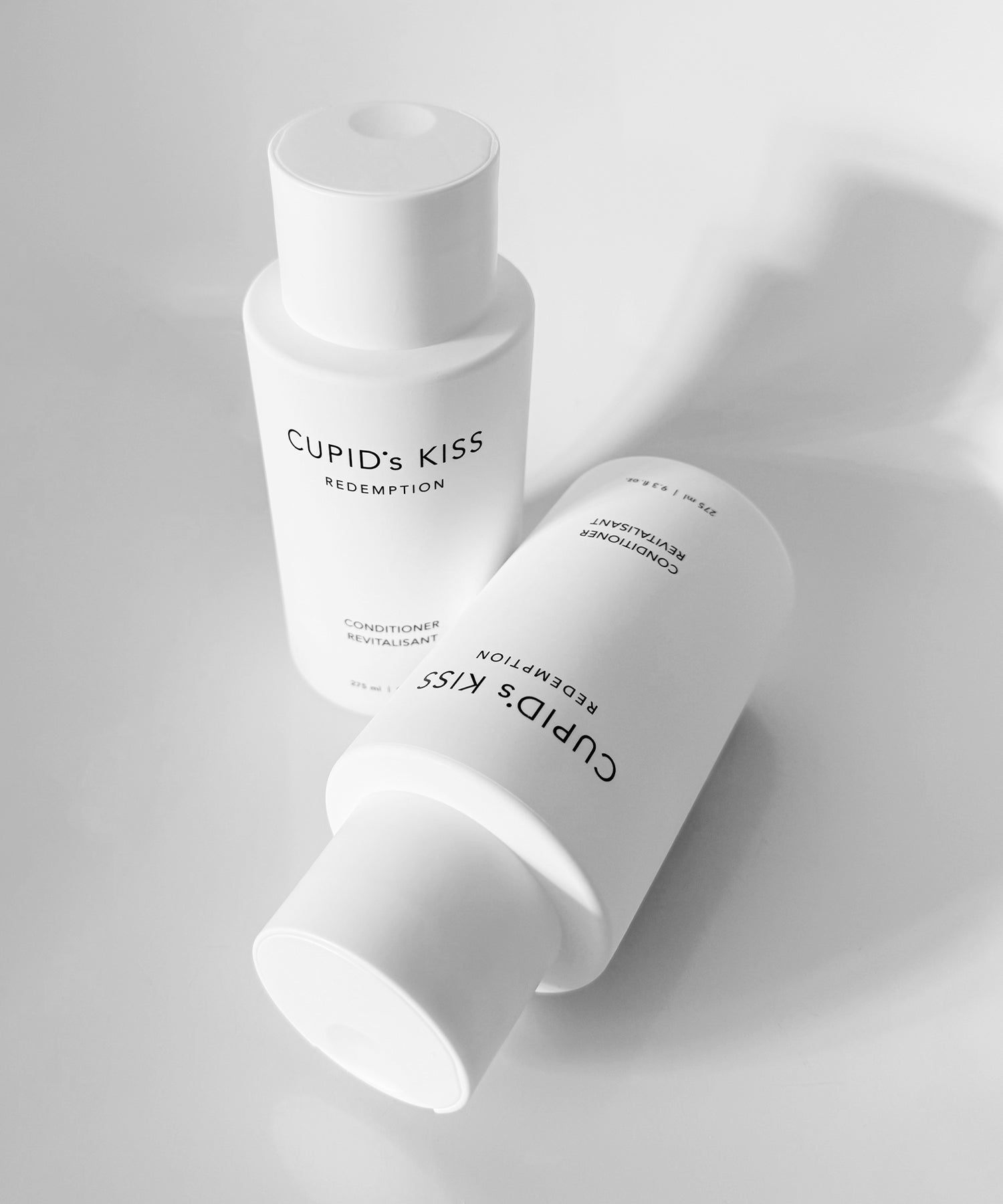
1 / Apply Redemption Conditioner generously from the mid-lengths to the tips, or from the roots to the tips, as desired.
2 / To ensure even coverage, work around your hair in sections. Use your fingers to gently detangle without ripping or creating tension.
3 / Leave the conditioner in for at least 1-3 minutes, allowing the ingredients to penetrate and deliver their benefits.
4 / Rinse thoroughly with lukewarm water and finish with cool water. Cold water helps smooth and close the hair cuticle, making the hair shinier and less prone to frizz.
5 / Use a soft towel to gently squeeze the excess water out of your hair. Hair is most fragile when wet, and the way you dry your hair has a big impact on hair health and texture. Rough towel drying can damage wet hair.

SLEEPING WITH WET HAIR
Wet hair temporarily loses its hydrogen bonds, making strands more elastic, but also weaker and prone to breakage, split ends, and tangles due to friction on your pillow. Additionally, a moist pillow promotes fungal and bacterial growth, which can lead to irritation.
For healthier hair and scalp, ensure your hair is dry before going to bed.
MULTI-DIMENTIONAL PROTECTION
RESURGENCE BLOWOUT CRÈME
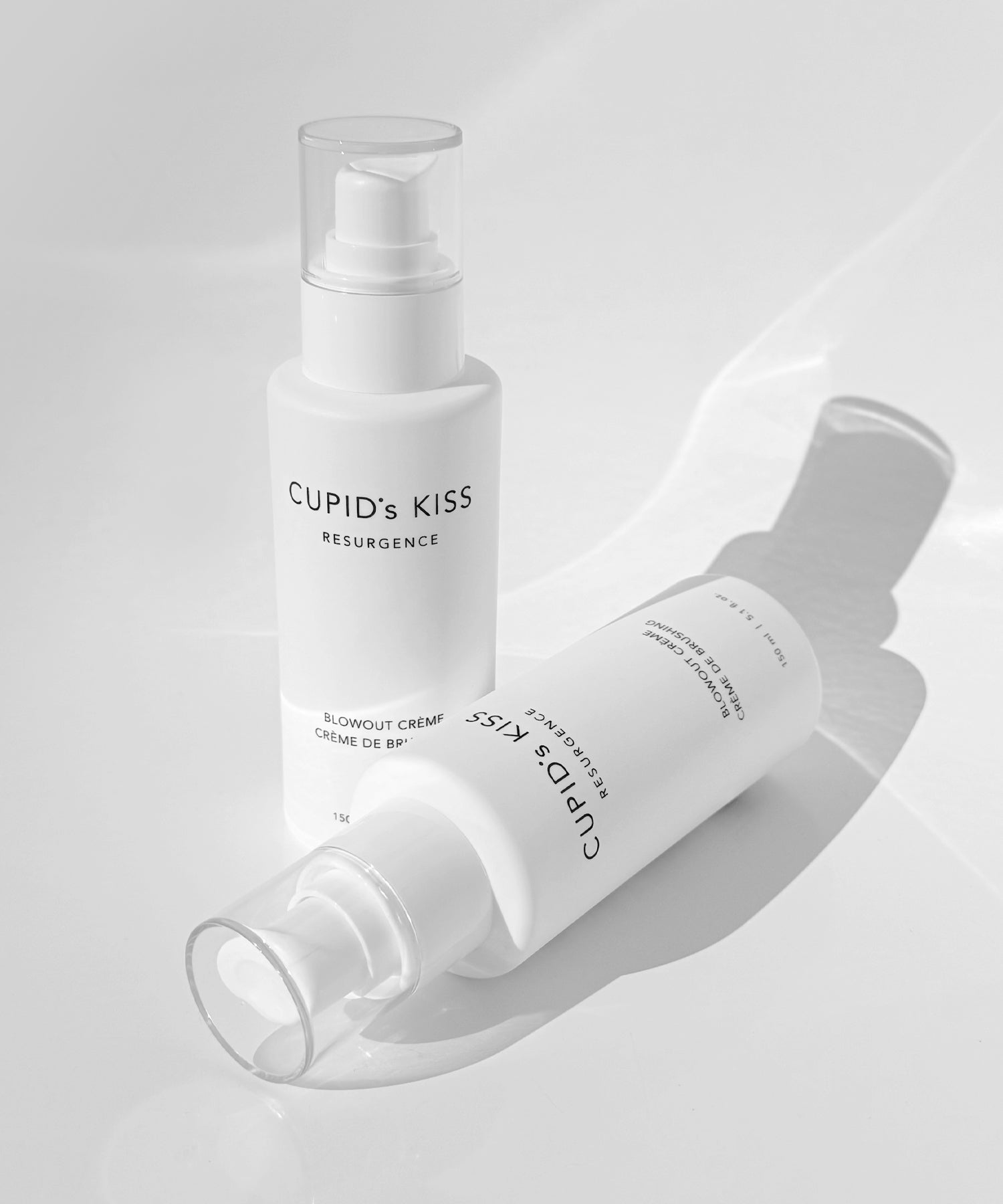
Resurgence Blowout Crème protects the hair structure against the damaging impact from UV-radiation, pollution, heat and mechanical stress, while also nourishing each strand.
On Damp Hair / Apply a light, even layer to towel-dried hair, focusing on mid-lengths and ends. Blow-dry thoroughly before using any hot styling tools — never use hot styling tools on damp or wet hair.
On Dry Hair / Use daily to replenish moisture and refresh protection.
Finisher / Smooth a small amount through dry ends to add definition, control frizz, and tame flyaways.
BARRIER CARE

SUPERPOSITION ÉLIXIR
Superposition is a multifunctional élixir for skin and hair, designed to support lipid balance and barrier integrity.
Face, Neck & Décolleté / Distribute evenly on clean skin morning, evening or throughout the day — apply after water-based formulas (such as serum, vitamin C, hyaluronic acid, or retinol) and before occlusive formulas like SPF.
Makeup Primer / Apply as described above and allow Superposition Élixir to absorb for one minute before applying foundation. Alternatively, mix a few drops of the élixir with foundation in your hand before application for a natural, light-reflective finish.
Highlighter / Dab a tiny amount on the peak of your cheekbones after makeup application to create a lifted, radiant effect.
Hair / Warm 2-4 drops between your hands and evenly distribute through damp or dry hair — focusing on the lengths and ends — for softness, smoothness and lustre.
Pre-Shampoo Treatment / Apply to dry, damaged hair 10-30 minutes before hair washing to minimise cuticle lifting during hair wash.

MECHANICAL STRESS & TENSION
Raking a comb or brush straight from the scalp down creates friction, tangles, and mechanical stress along the hair shaft. This results in cuticle abrasion, strand breakage, and traction at the follicular root, weakening the anchoring structures over time. Instead, start at the ends and work your way up. Work in sections, if needed.
Test your brush on your skin. If it feels rough on the skin, it's too abrasive for your hair. Choose softer bristles to minimise mechanical damage.
Slick buns and ponytails are chic until your follicles give up. Constant tension from ponytails, buns, braids and extensions stresses the hair follicles, causing traction alopecia (hair loss from tension), specially around the hairline where the hair structure and the hair anchoring are weakest. Choose loose styles, change partings, and avoid tight accessories.
